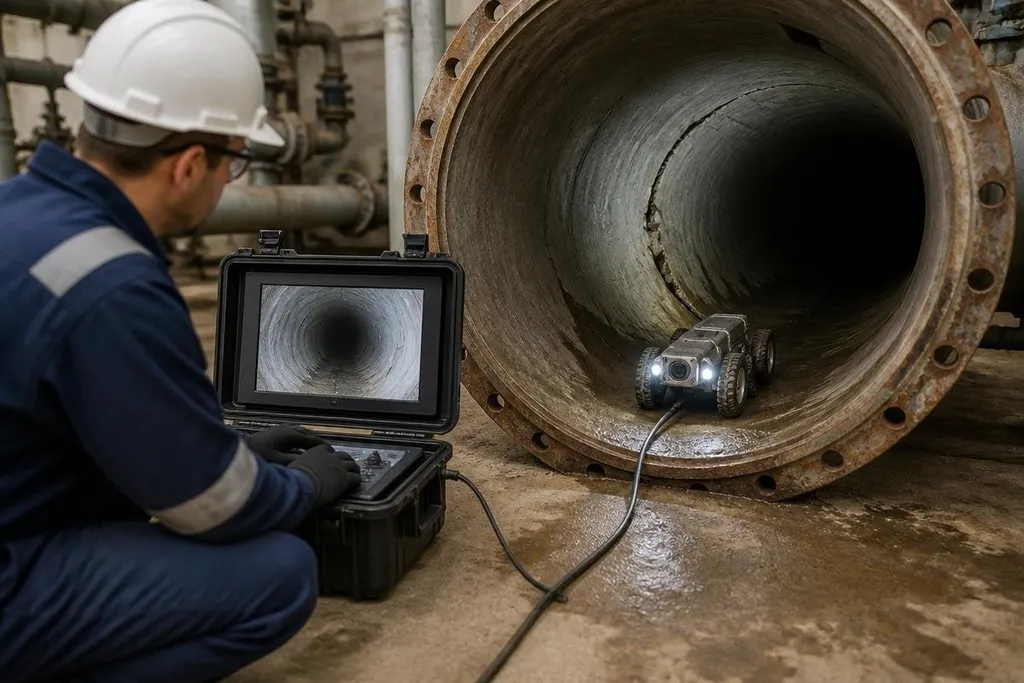
A camera can show a crack in a pipe, but it can't decide on its own whether that crack needs action. The next phase of inspection robotics will connect images and sensor readings to clear records that maintenance teams can check and use.
- Cameras find visible damage; thermal and ultrasonic sensors add different evidence
- Autonomous systems still need safe routes, clean data, and human review
- The useful measure will be fewer missed faults, not more dramatic demos
From images to inspection records
Most inspection work begins with sensing. A platform may use cameras for surface damage, LiDAR for shape and distance, or thermal sensors for heat changes. Each sensor sees a different part of the asset, so the robot can build a fuller record than a single image allows.
The hard part comes after sensing. Software must match new readings with earlier inspections, mark the same location, and show what changed. That turns a robot from a moving camera into a tool for comparing asset condition over time.
A useful report should answer plain questions: where is the fault, what evidence supports it, and what should a technician check next? If the report cannot answer those questions, a larger sensor package will not fix the work.
Autonomy has a narrow job
Inspection robots will need to move through places that are unsafe, remote, or difficult for people to enter. Depending on the site, that may mean a wheeled robot on a factory floor, a flying system around structures, or a crawler on a tank, pipe, or vessel.
Autonomy can help the robot follow a planned route, avoid obstacles, and return to marked points. It still depends on maps, lighting, signal quality, battery life, and the condition of the surface.
A wet floor, a blocked passage, or a weak connection can change the result. This is why inspection autonomy should have a narrow job: the robot needs to reach the right place, collect usable evidence, and stop safely when conditions fall outside its limits.
It doesn't need to make every maintenance decision by itself.
An inspection robot’s detection claim needs the sensor, test site, date, and measured result beside it. A report from Robot24 can give engineers and buyers that record before they judge whether the system is ready for routine maintenance.
The record matters as much as the robot
Inspection data has value only when a team can trust its source and find it later. A record should connect the reading to a location, time, sensor, and operating condition. That makes a later review possible when a fault grows or a repair needs checking.
The record also needs a clear level of certainty. A robot may find a mark that needs human review, rather than a confirmed structural fault. Clear labels keep the system from turning a sensor result into a claim the evidence cannot support.
I’d judge an inspection robot by the quality of the decision it supports, not by how much of the route it completes without help.
That standard changes product choices. A system with slower movement may be the better fit if it keeps the camera steady, repeats the same path, and gives technicians records they can compare.
What remains unproven
The main open question is how well these systems work across changing sites. Performance in a controlled test area may look good, yet dust can cover a lens, lighting can shift, or an asset can differ from the training data.
Another limit is fault judgment. Detecting a change is easier than deciding what caused it or how quickly it may worsen. Human inspectors will remain part of the process where safety, repair cost, or legal records depend on the result.
Data handling also matters. Inspection records may show private facilities, production equipment, or security-sensitive areas. Buyers will need clear rules for storage, access, retention, and software updates before regular use.
A practical buying check
Before choosing an inspection robot, check these points:
- Name the fault: Define the damage or change the system must find.
- Match the sensor: Use the sensor that can produce evidence for that fault, not the longest list of options.
- Test the route: Check floors, slopes, lighting, signal loss, water, dust, and access points.
- Review the record: Confirm that each result includes a location, time, sensor source, and image or reading.
- Set human checks: Mark the findings that need an engineer or technician before any repair decision.
- Plan failure steps: Decide what happens when the robot loses contact, gets stuck, or reports unclear data.
Inspection robots will become more useful as their reports become easier to verify. The machines can collect more observations, but people will still decide what those observations mean. The next serious test is whether a maintenance team can act on the record without repeating the whole inspection.