
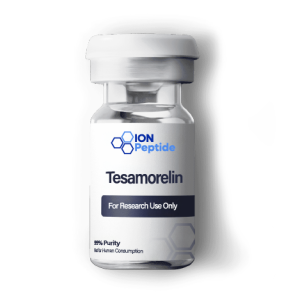
Introduction to tesamorelin
Tesamorelin is a synthetic peptide that functions as a growth hormone-releasing hormone (GHRH) analog. Its primary role is to stimulate the pituitary gland to release growth hormone (GH), making it a key agent in both clinical therapy and scientific research. Understanding the mechanism of action of tesamorelin provides insights into hormonal regulation, metabolic effects, and the therapeutic potential of GHRH analogs.
tesamorelin as a GHRH Analog
Tesamorelin is structurally designed to mimic endogenous GHRH, binding selectively to GHRH receptors on pituitary somatotrophs. This binding triggers intracellular signaling pathways that stimulate pulsatile GH release. By acting as a GHRH analog, tesamorelin promotes physiologic GH secretion rather than excessive or continuous hormone release, differentiating it from direct GH therapy.
Intracellular Mechanism of tesamorelin
Once tesamorelin binds to its receptor, it activates the adenylate cyclase-cAMP-PKA pathway, resulting in the transcription and secretion of GH. The rise in GH levels subsequently stimulates insulin-like growth factor 1 (IGF-1), which mediates anabolic and lipolytic effects. Studies confirm that this precise mechanism allows tesamorelin to modulate body composition and metabolic regulation safely and effectively.
tesamorelin and Metabolic Regulation
The GH-IGF-1 axis activated by tesamorelin has significant effects on metabolism. By increasing GH levels, tesamorelin enhances lipolysis, particularly in visceral fat stores, and supports lean body mass maintenance. Clinical research demonstrates that tesamorelin improves lipid profiles, reduces triglycerides, and optimizes energy utilization. These effects highlight how understanding tesamorelin’s mechanism can inform therapeutic strategies for metabolic disorders.
Clinical Implications of tesamorelin
Tesamorelin’s controlled GH stimulation makes it suitable for conditions requiring targeted endocrine modulation, such as HIV-associated lipodystrophy. Clinical studies show that tesamorelin reduces visceral adiposity, enhances lean mass retention, and maintains metabolic health. The peptide’s mechanism ensures efficacy while minimizing risks associated with supraphysiologic GH exposure, emphasizing its therapeutic value.
Safety and Research Applications
Tesamorelin is generally well-tolerated, with mild side effects like injection-site reactions and transient edema. Monitoring IGF-1 levels is recommended to prevent excessive GH activity. Tesamorelin also serves as an important research tool, providing insights into GHRH receptor signaling, GH pulsatility, and the broader endocrine and metabolic pathways affected by peptide therapeutics.
Conclusion
Tesamorelin is a highly effective GHRH analog that precisely stimulates GH secretion. Its mechanism of action involves receptor binding, intracellular signaling, and IGF-1-mediated metabolic effects. Research and clinical studies consistently show that tesamorelin improves visceral fat reduction, metabolic regulation, and hormonal balance while maintaining a strong safety profile. Understanding tesamorelin’s mechanism is essential for advancing peptide-based therapies and exploring growth hormone pathways in both clinical and research contexts.